
Sydney–New York recurring meetings: plan the two-hour seasonal swing
Sydney and New York observe daylight saving in opposite seasons. Their difference is 14 hours in July 2026 and 16 hours in December. A recurring meeting that is convenient in one season can move by two local hours in the other.
Worked example to check against your calendar
| Example anchor | Sydney display | Purpose |
|---|---|---|
| 6 July 2026, 17:00 New York | 7 July, 07:00 | July baseline |
| 7 December 2026, 17:00 New York | 8 December, 09:00 | Unchanged New York hour |
| 7 December 2026, 16:00 New York | 8 December, 08:00 | Illustrative shared seasonal adjustment |
Check both hemispheres’ transition calendars
NSW government guidance says daylight saving begins on the first Sunday in October and ends on the first Sunday in April. The US uses the second Sunday in March and first Sunday in November. These independent changes create shoulder periods as well as the summer and winter extremes.
The worked cases use Australia/Sydney and America/New_York, not every city in Australia or the Southern Hemisphere. Other regions can have different dates or no daylight saving. Check the actual cities and occurrence date rather than applying a hemisphere-wide two-hour rule.
Choose an anchor before choosing exceptions
A series anchored at 17:00 New York appears at 07:00 the next day in Sydney on 6 July 2026. Keep that same New York hour on 7 December and it appears at 09:00 the next day in Sydney. Neither city’s display is broken; their offset has changed.
If both groups agree to share the seasonal adjustment, one possible arrangement is 17:00 New York in July and 16:00 in December. Those examples give Sydney 07:00 and 08:00 respectively: each side changes its local hour by one. This is a negotiation example, not a claim that those times suit every team.
Audit the shoulder occurrences separately
A two-season agreement does not automatically settle every week between the transitions. Inspect the occurrences around March, April, October and November in both cities. Decide the change date explicitly and retain the organizer’s single source of truth.
If your calendar supports scoped series edits, verify which occurrences change before saving. Google documents event time-zone controls, but the calendar’s display zone is separate from the event’s anchor. After any agreed adjustment, check the first changed occurrence and one ordinary week after it.
What it looks like
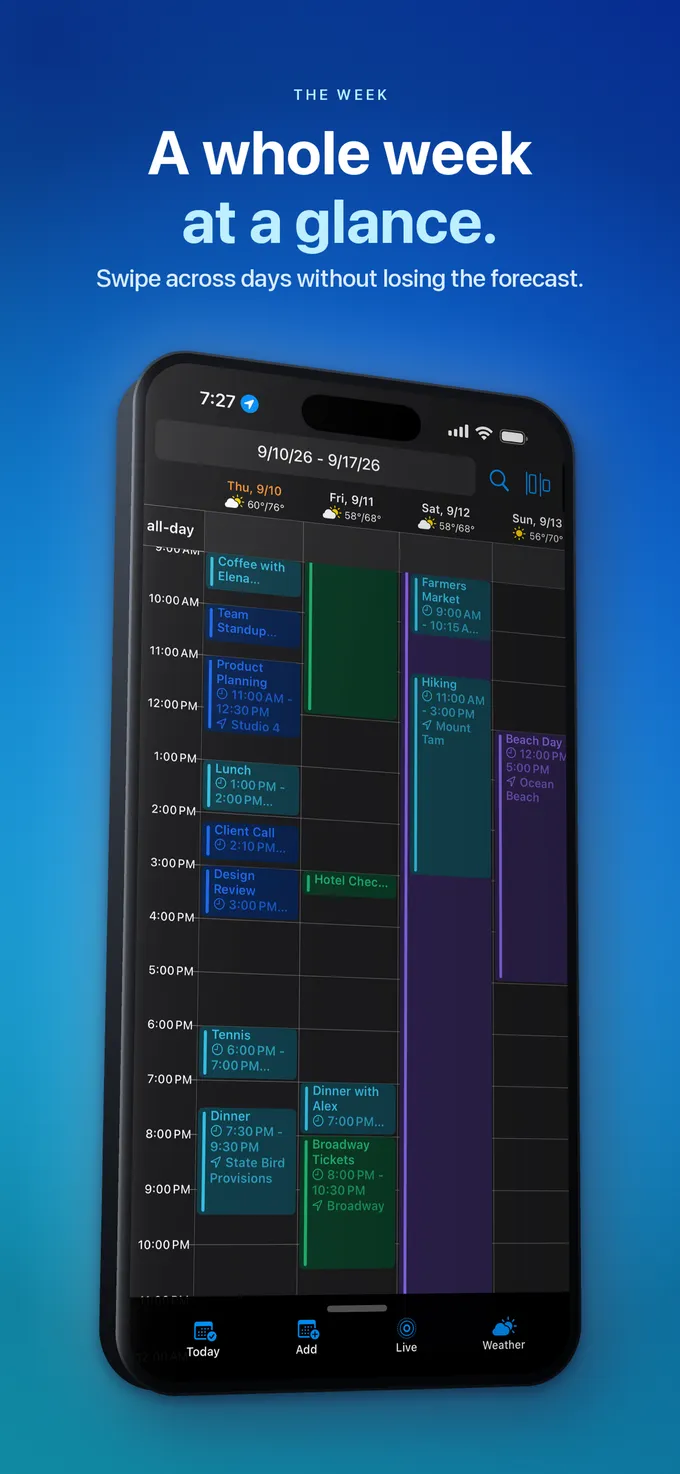
Cloud Calendars overview, using our product images. Provider settings and protocol examples described in this guide are separate from the screens shown here.
What to do
- Use the two actual city zones.
- Compare July, December and each transition shoulder.
- Agree whether one city stays fixed or both adjust.
- Verify dates and edit scope before updating invitations.
Questions
- Does every Southern Hemisphere meeting shift by two hours?
- No. This comparison depends on these two cities and their current rules.
- Can both cities retain the same local hour all year?
- Not when their relative offset changes. Someone must accept a changed hour or an agreed exception.