
Cloud Calendars vs Apple Calendar (iPhone, iPad & Mac)
Apple Calendar is pre-installed, ad-free, and tightly integrated with Siri, Apple Watch, Mac, and iOS 18 Reminders, making it a strong default for single-ecosystem Apple schedules. Cloud Calendars upgrades iPhone and iPad planning with side-by-side multi-calendar columns, hourly and up-to-10-day Apple WeatherKit forecasts inside the timeline, direct Google OAuth with Google Meet links, and Lock Screen Live Activity countdowns. Arte Soft develops Cloud Calendars and publishes this comparison.
Feature-by-Feature Comparison Matrix
| Capability | Cloud Calendars (iPhone & iPad) | Apple Calendar (Built-in) |
|---|---|---|
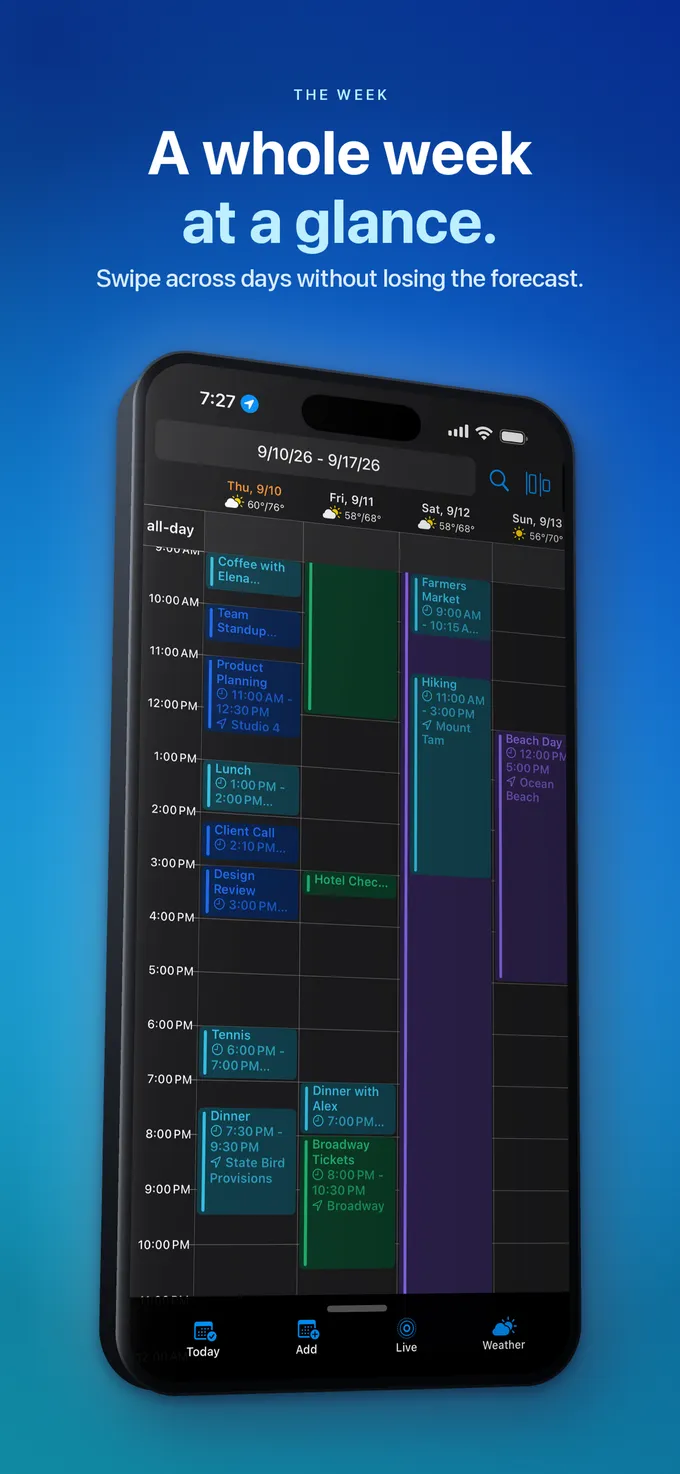
| Planning views | Day, Week (portrait & landscape), Month, Year, List & Multi-calendar column Day view | Day, Multi-day/Landscape Week, Month (compact/stacked/details in iOS 18), Year & List |
| Side-by-side account columns | Dedicated Multi-calendar view with one column per selected calendar | Overlays all calendars into one shared timeline on iPhone |
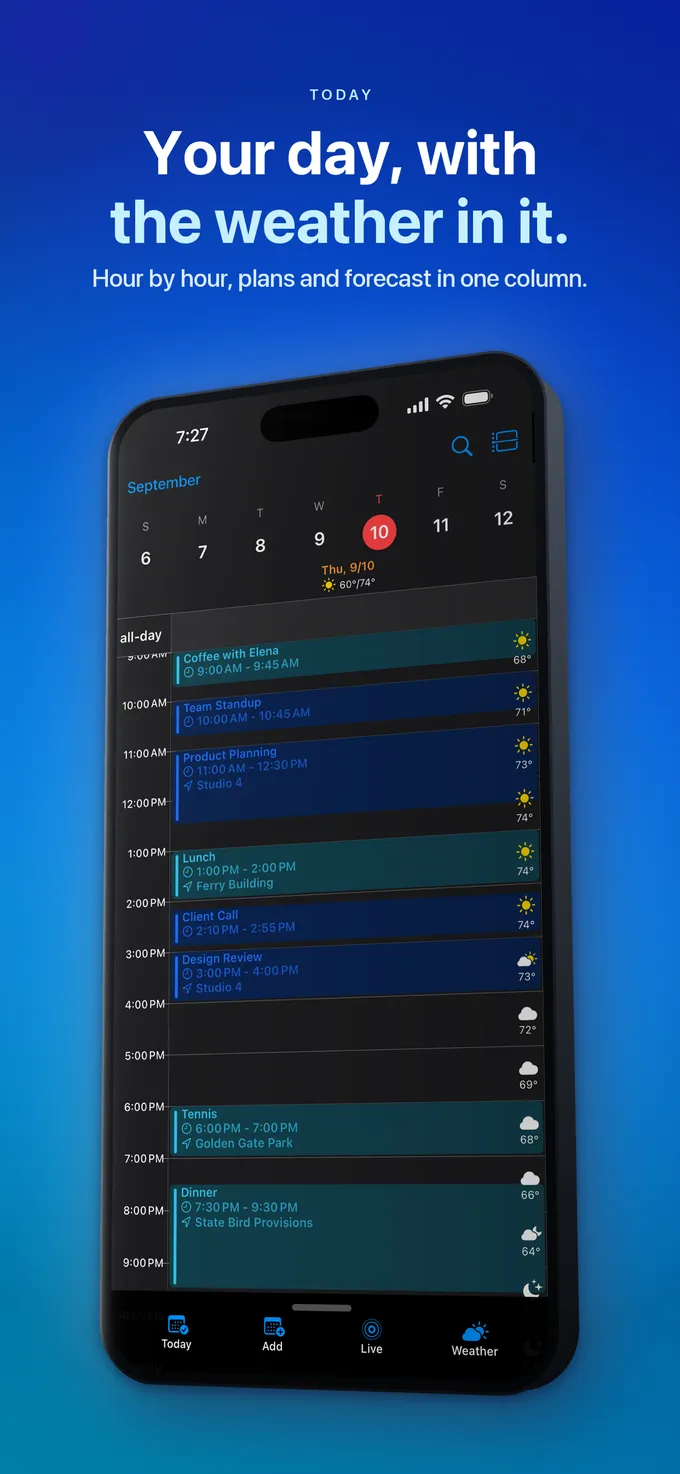
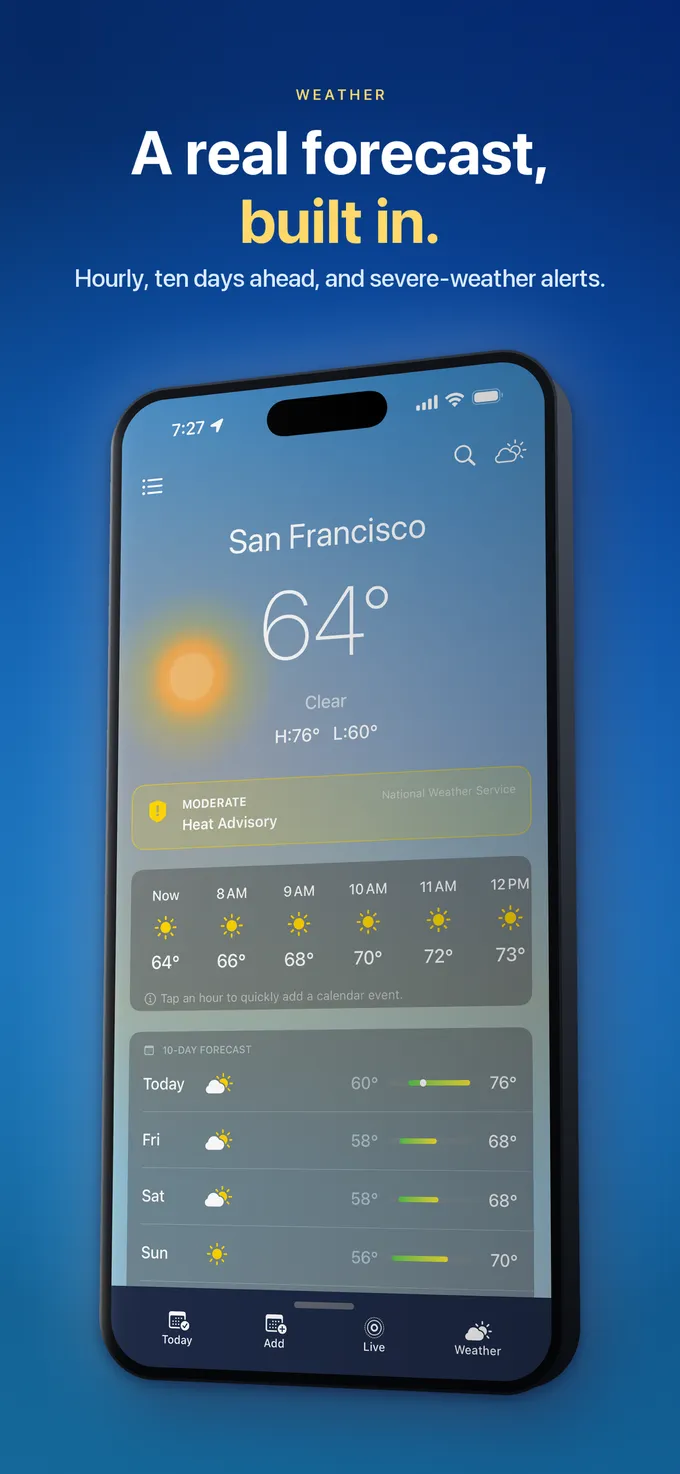
| Weather integration | Full Apple WeatherKit hub + hourly temp, rain, UV, wind/gusts beside hours & tap-hour draft | No built-in hourly weather grid or 10-day weather station inside Apple Calendar on iPhone |
| Reminders & tasks | Event alerts and second alerts only; does not display Apple Reminders checklists | Native iOS 18+ Apple Reminders creation and completion directly inside Calendar |
| Conferencing links | Google Meet (Free) and Microsoft Teams (Premium) link support on events | FaceTime video links built in; third-party links pasted or added via providers |
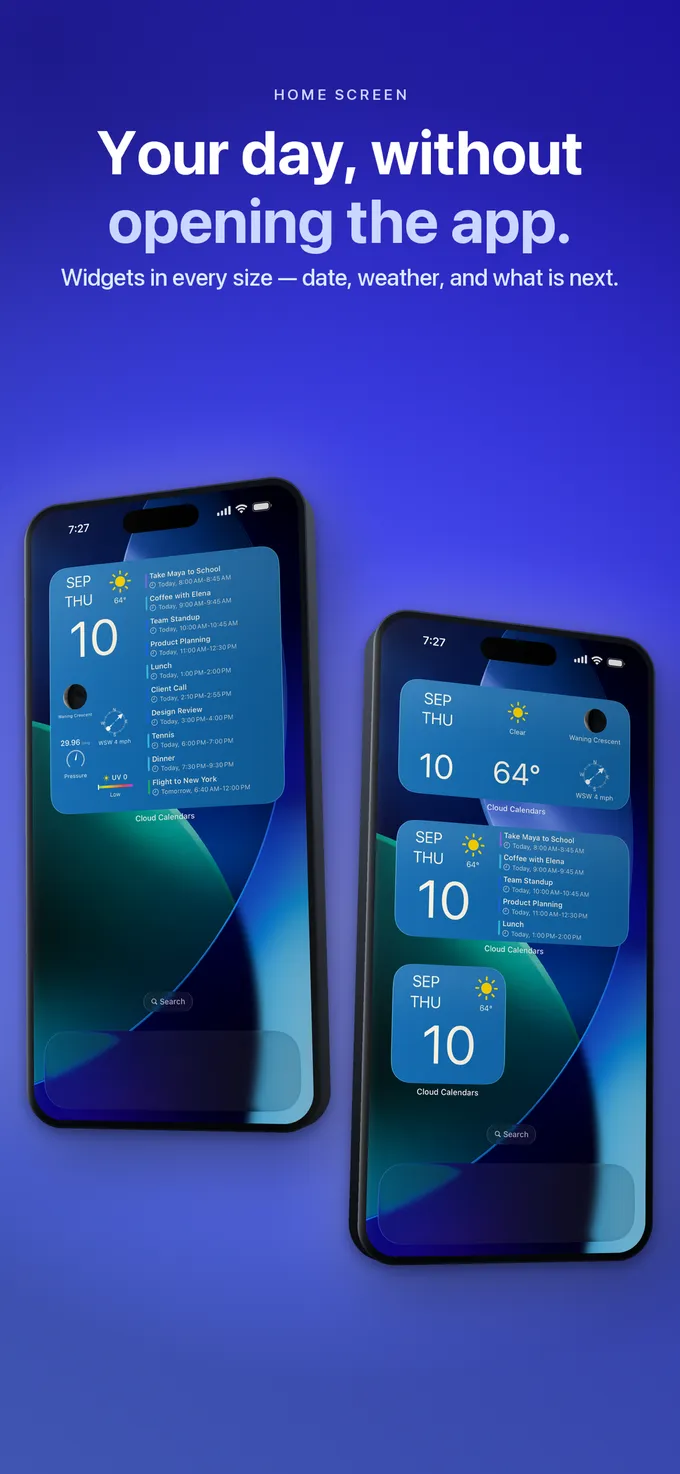
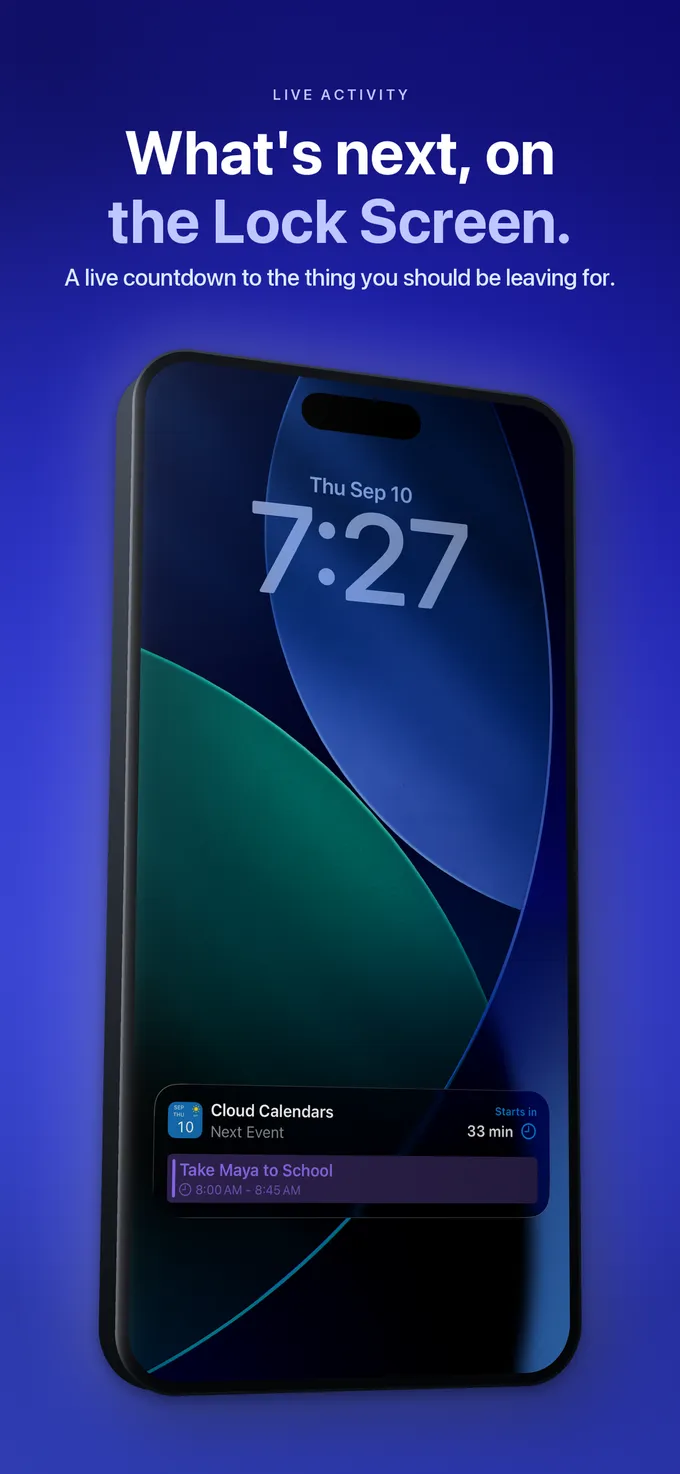
| Widgets & Lock Screen | Small/medium date+weather widgets, medium/large timed event lists & Live Activity countdown | Up Next, Month & List widgets across Home Screen, Lock Screen, StandBy & Apple Watch |
| Event sharing options | Provider invites plus Cloud Calendars link/QR/email sharing & iPhone App Clip preview | iCloud calendar sharing and standard iCalendar/email attendee invitations |
How Account Sync Differs Under the Hood on iPhone
On iOS, third-party apps do not replace Apple Calendar’s database; instead, Apple provides the shared EventKit calendar store alongside direct provider OAuth APIs. Apple Calendar syncs iCloud with native Push, Exchange via ActiveSync/OAuth, and Google Calendar via iOS Calendar Accounts (which uses periodic Fetch rather than instant Google Push on standard Gmail accounts).
Cloud Calendars reads any device calendar you grant Full Access to in iPhone Settings (including iCloud, CalDAV, and subscribed ICS feeds) and adds direct Sign in with Google (Free) and Sign in with Microsoft (Premium) connections that synchronize via mirrored calendars in the iOS store. Avoid enabling the exact same Google account through both routes without hiding one list, or meetings will display twice.
Account Sync, Protocol & Platform Support
| Provider / Dimension | Cloud Calendars | Apple Calendar |
|---|---|---|
| Google Calendar | Direct Sign in with Google OAuth + Meet links (Free), or read via iOS Calendar Accounts | Configured in iOS Settings > Apps > Calendar > Calendar Accounts (Fetch-based refresh) |
| Microsoft 365 / Outlook / Exchange | Sign in with Microsoft OAuth + Teams (Premium), or read Exchange via iOS Calendar Accounts | Native Exchange / Outlook.com account support in iOS Settings (subject to org policy) |
| Apple iCloud & CalDAV | Full read/write via iOS Calendar Accounts (EventKit permission required); Free | First-party native iCloud Push & CalDAV account configuration in iOS/macOS Settings |
| ICS URL Subscriptions | Displays iOS subscribed ICS calendars as read-only feeds | Native Add Subscription Calendar (.ics URL) with optional iCloud sync across Apple devices |
| Supported Platforms | iPhone & iPad (iOS / iPadOS 18.0+) | iPhone, iPad, Mac, Apple Watch, Apple Vision Pro & iCloud.com web |
| Offline & Local Storage | Account-free on-device local calendars + cached iOS store events offline | Full offline cache via iOS/macOS system store + "On My iPhone" local calendars |
Pricing and When to Use Apple Calendar vs Cloud Calendars
Apple Calendar costs $0 with zero advertising across every Apple device. Because both apps can read the same iCloud and device calendars simultaneously, many people keep Apple Calendar on Mac and Apple Watch while using Cloud Calendars on iPhone and iPad for multi-column week reviews and weather planning.
In Cloud Calendars, every view, Google sync, Home Screen widgets, and the Apple WeatherKit forecast hub are included in Free (ad-supported). Advanced ($0.49/month or $4.99/year in the US App Store) removes ads, while Premium ($4.99/month or $49.99/year) adds Microsoft Calendar and Teams links.
Pricing & Best Choice by User Scenario
| User Scenario | Cloud Calendars | Apple Calendar | Best Choice |
|---|---|---|---|
| Zero-cost, zero-ad calendar across iPhone, Mac & Watch | Free tier has ads (Advanced is $4.99/yr); iPhone & iPad only | $0 built-in, zero ads across iOS, iPadOS, macOS & watchOS | Apple Calendar |
| Checking Apple Reminders alongside meetings | Does not render Apple Reminders checklists in timeline | Scheduled iOS 18+ Reminders appear directly in Day/Month views | Apple Calendar |
| Outdoor work, travel, sports & weather-sensitive days | Hourly WeatherKit temps, wind, UV & rain beside timeline hours | Requires switching between Calendar and Apple Weather apps | Cloud Calendars |
| Comparing 3–5 busy calendars without overlapping bars | Multi-calendar Day view puts each calendar in its own column | Overlays all calendars into one combined day column | Cloud Calendars |
| Google Meet + portrait Week grid on iPhone | Readable portrait & landscape Week grid + Google Meet in Free | iPhone portrait defaults to Day/Stacked Month; Week needs landscape | Cloud Calendars |
| Lock Screen countdown to next timed appointment | Dedicated Live Activity countdown + date/weather widgets | System Up Next widgets & standard notifications | Cloud Calendars |
Portrait Week Grids, Multi-Column Days, and Weather Context
iOS 18 improved Apple Calendar with zoomable Month views and inline Reminders, yet seeing a full 7-day Week grid in portrait orientation on iPhone and checking hourly weather beside appointments still require extra taps or separate apps.
Cloud Calendars renders both portrait and landscape Week views with daily high/low temperatures in column headers, plus a dedicated Weather Hub showing feels-like temperature, precipitation, wind and gusts, UV index, humidity, and pressure for up to ten returned Apple WeatherKit forecast days.
Running Both Apps Together Without Duplicate Alerts
Installing Cloud Calendars alongside Apple Calendar is non-destructive: moving an iCloud appointment in Cloud Calendars updates the underlying iOS record immediately. However, leaving notifications enabled in both apps will trigger double banners before every meeting.
Choose one primary app for audible reminders and disable notifications for the secondary app in iPhone Settings > Notifications, rather than deleting alerts saved on the calendar event itself.
What it looks like
What to do
- Grant Full Access in Settings > Privacy & Security > Calendars so Cloud Calendars can read existing iCloud/device events.
- Check whether your Google account is already enabled in iOS Settings before adding a second route, or hide the duplicate list.
- Compare portrait Week view and Multi-calendar Day columns on your iPhone against Apple Calendar’s stacked Month view.
- Silence notifications in whichever app is secondary so you avoid duplicate banners before meetings.
- Keep Apple Calendar on Mac and Apple Watch when you need desktop editing or wrist complications.
Questions
- Does Cloud Calendars sync with Apple iCloud Calendar?
- Yes. Enable iCloud Calendar on your iPhone or iPad under your Apple Account and grant Cloud Calendars Full Access to Calendars in iOS Privacy settings. iCloud calendars are supported in the Free plan.
- Why am I getting two notifications for every iCloud event?
- Both Apple Calendar and Cloud Calendars can deliver local notifications for selected calendars. Keep the event alert intact and turn off notifications for one of the two apps in iPhone Settings > Notifications.
- Does Cloud Calendars show iOS 18 Apple Reminders?
- No. Apple Calendar displays scheduled Apple Reminders natively in iOS 18+, whereas Cloud Calendars focuses on calendar events, event alerts, multi-account columns, and weather forecasts.